

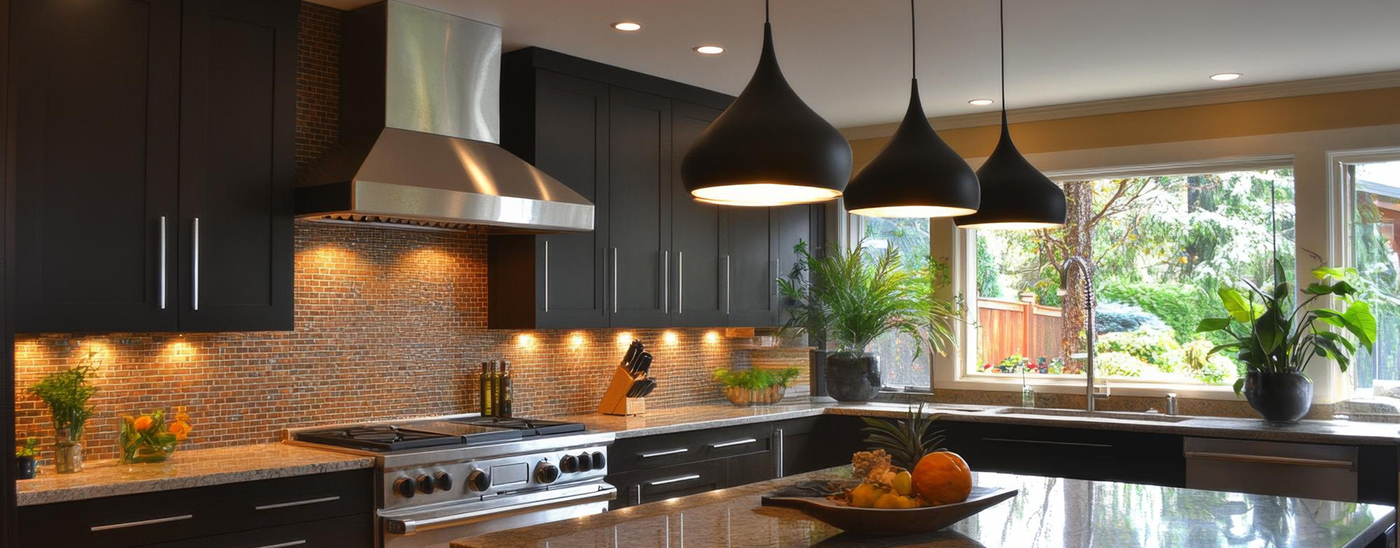
Cabinet and countertop colors occupy more visual space than almost any other kitchen finishes. When they work together, the room feels intentional and balanced. When undertones compete, even individually beautiful materials can look disconnected. The most reliable approach is to compare physical samples in the room and build the palette from the most permanent surfaces outward.
Identify the Countertop’s Undertone
Look beyond whether the surface is generally white, gray, beige or black. A white quartz may lean warm and creamy, cool and blue, or neutral. Granite and natural stone may include several mineral colors that can guide the cabinet selection. Porcelain patterns can combine a background tone with veining that reads differently under changing light.
Choose a cabinet sample that relates to one of those undertones without trying to match it exactly. A slight, intentional contrast is often more successful than two near-matches that appear accidental.
Decide Where the Visual Focus Should Be
If the countertop has dramatic movement, quieter cabinet colors allow it to remain the feature. If the surface is subtle, the cabinets can carry more color or texture. Wood cabinetry introduces natural variation, so its stain should be evaluated alongside the complete slab or a large countertop sample.
Two-tone cabinetry can add depth, but the combination should have a clear purpose. An island may be darker than the perimeter, or tall pantry cabinets may use a contrasting finish to create a furniture-like effect.
- Warm white cabinets with warm-veined or earthy surfaces
- Soft gray or greige cabinets with balanced neutral countertops
- Natural wood with quiet stone patterns that do not compete
- Deep green, blue or charcoal as an island or accent color
Test Samples in the Actual Light
Kitchen lighting changes throughout the day. A cabinet color that looks balanced in a showroom may appear much warmer or cooler beside the home’s windows, floors and wall paint. View samples vertically and horizontally because light strikes cabinet doors and countertops differently.
Evaluate the combination in daylight and under the planned artificial lighting. If bulbs will be changed during renovation, test the samples under the new color temperature before approving finishes.
Include the Backsplash and Flooring
Cabinets and countertops do not exist in isolation. Flooring may introduce warm wood, cool tile or strong pattern. The backsplash sits directly between the two main surfaces and should connect them without adding unnecessary competition. Paint and hardware can refine the palette after the permanent selections are established.
Collect every sample on one board or table. Seeing the whole palette together makes undertone conflicts easier to identify before materials are ordered.
Plan Your Project With Confidence
THERAGENE MODERN CABINET DESIGN LLC can help coordinate cabinet finishes, countertop materials and surrounding selections into one cohesive kitchen palette. Request a consultation to compare options in the context of your project.
