
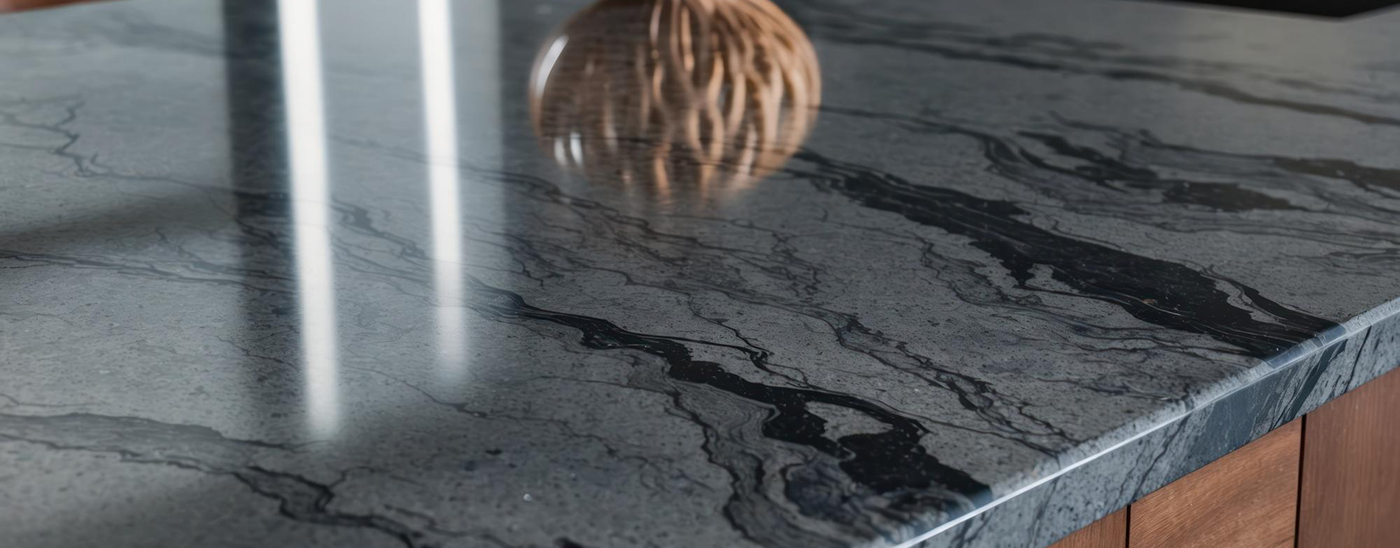
A waterfall countertop continues the horizontal surface vertically down one or both sides of an island, peninsula or cabinet run. Instead of ending at a standard overhang, the countertop material appears to flow toward the floor. The result can be clean and architectural, but it requires careful slab planning and precise fabrication.
How the Waterfall Effect Is Created
The horizontal top and vertical panel are fabricated as coordinated pieces. A mitered joint is commonly used to create a crisp transition and conceal the exposed edge. When the material has strong veining, the fabricator plans how the pattern will continue across the turn, a technique often called bookmatching or vein matching depending on the slab arrangement.
The cabinet dimensions, finished floor and countertop thickness must be confirmed before fabrication. Small discrepancies become visible along a long vertical edge, which is why field measurements and installation planning are especially important.
Where Waterfall Countertops Work Best
Waterfall panels are most effective where the side of an island is highly visible. They can frame seating, create a strong boundary between the kitchen and an adjacent living area, or protect cabinet panels from frequent contact. A single-sided waterfall can provide an asymmetrical focal point, while two sides create a more formal framed appearance.
In a compact room, a heavily patterned waterfall may dominate the view. A quieter surface or a single panel can preserve the effect without overwhelming the surrounding cabinetry.
Benefits and Tradeoffs
The primary benefit is visual impact. The detail showcases the countertop material and can make an island feel like a complete piece of furniture. The vertical slab also creates a durable finished side in a high-traffic location.
The tradeoffs include additional material, fabrication and installation complexity. Pattern placement can increase slab requirements, and outlets or seams on the vertical face need to be planned carefully. Floor unevenness and adjacent trim details also require attention.
- Creates a strong architectural focal point
- Displays stone or porcelain pattern vertically
- Protects the island end panel
- Requires additional material and precise miter fabrication
- Must be coordinated with seating, outlets and floor conditions
Is It Right for Your Kitchen?
A waterfall edge is worth considering when the island is central to the design and the chosen material deserves emphasis. It may be less important when the island sides are hidden, the renovation budget has higher priorities or a traditional furniture-style end panel better matches the room. Compare a standard finished panel and a waterfall option before finalizing the slab order.
Plan Your Project With Confidence
THERAGENE MODERN CABINET DESIGN LLC can coordinate cabinet dimensions, slab selection, vein placement and mitered fabrication for a waterfall countertop. Request an estimate to evaluate the design and material requirements for your island.
